Craft & heritage
The tradition of cinnamon tapping & peeling
Ceylon cinnamon is still harvested and peeled by hand, using skills passed down through generations of cinnamon families in southern Sri Lanka.
Craft & heritage
The tradition behind every quill
Ceylon cinnamon peeling is still done by hand. Watch each careful stage of a craft passed down through generations of cinnamon peelers.
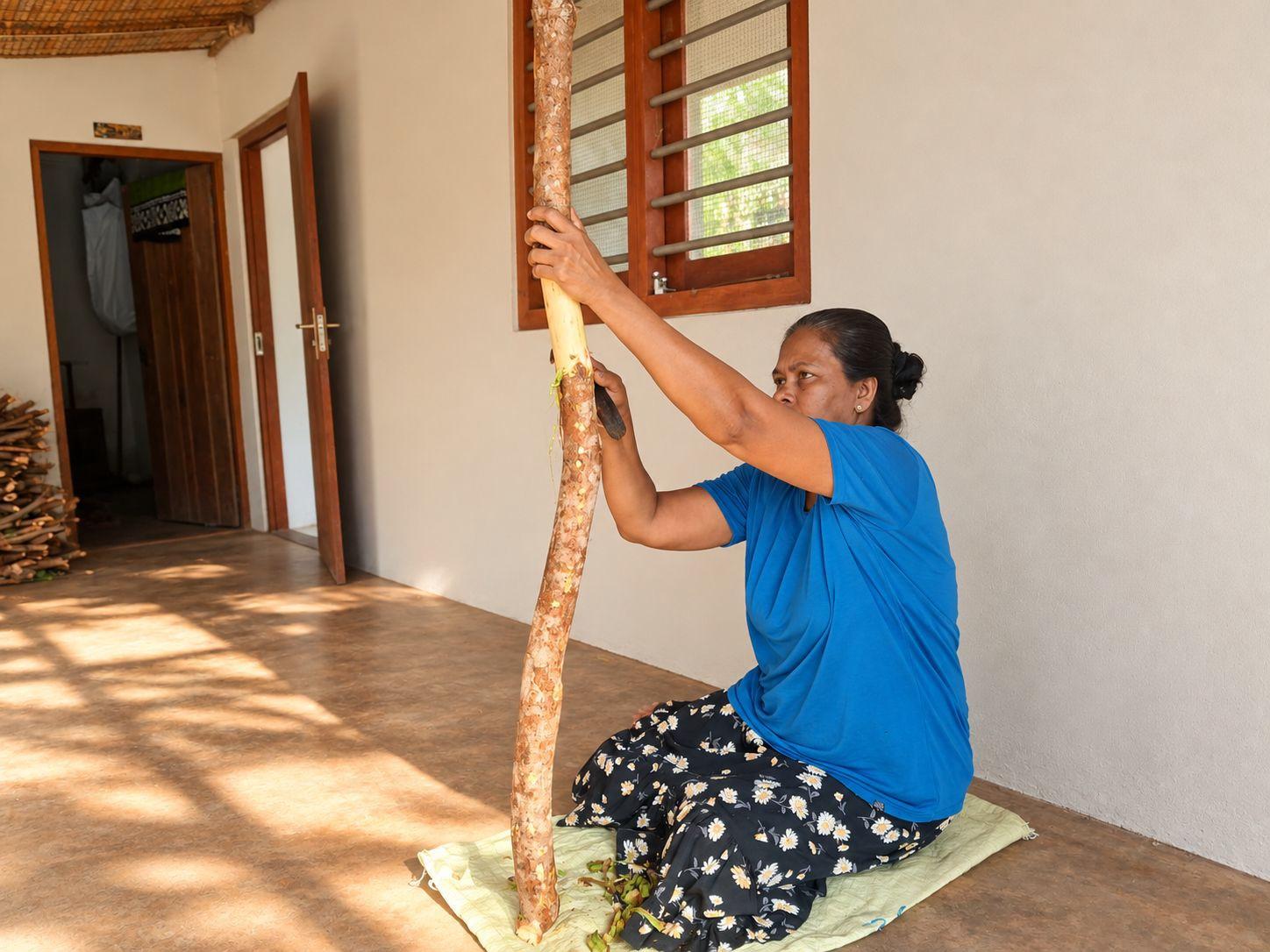
Removing the First Rough Skin
See how the outer layer is removed during the traditional preparation process — the first careful step that reveals the fragrant inner bark.
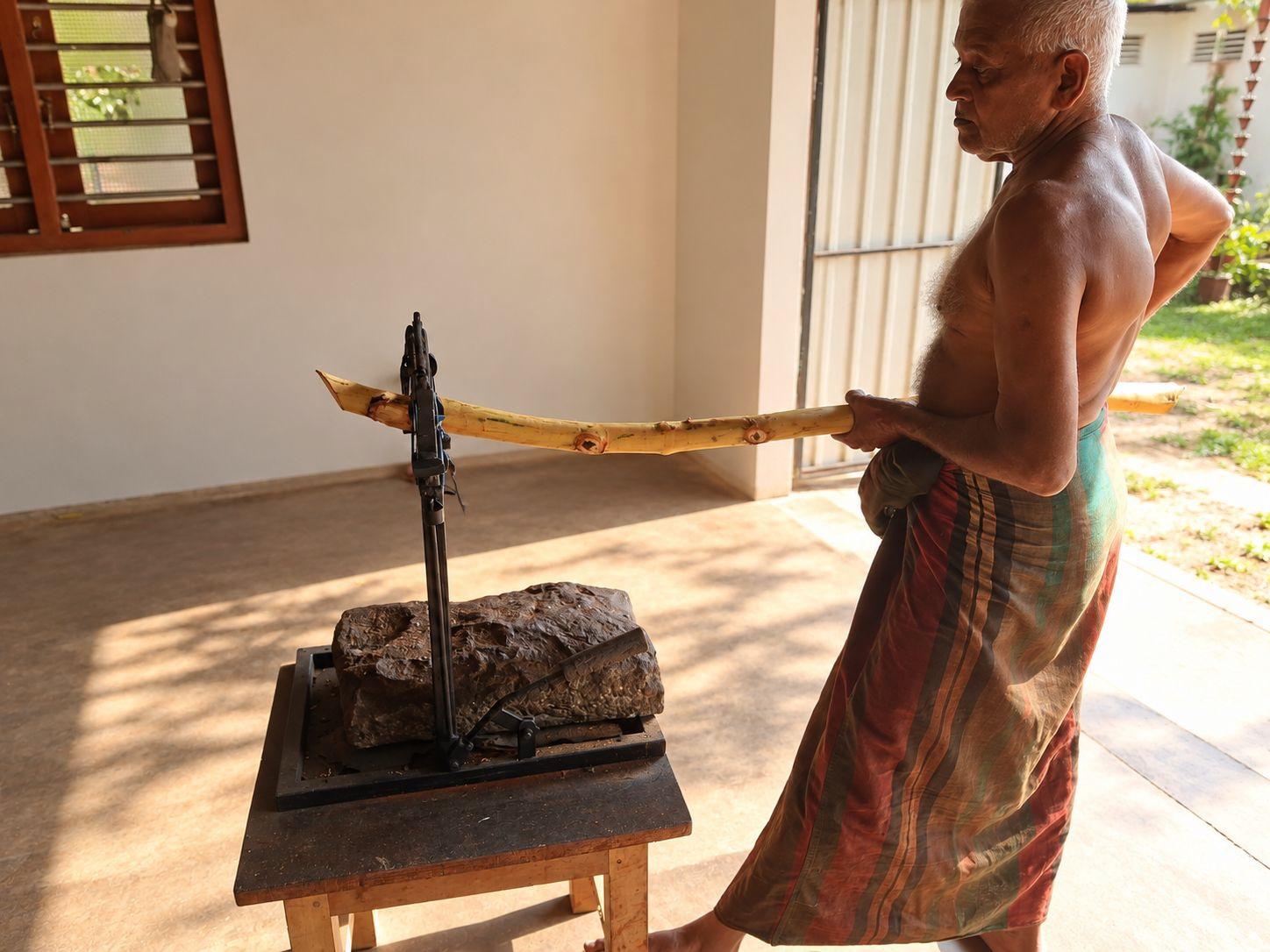
Rubbing the Cinnamon Bark
Observe how the bark is prepared before peeling, using a simple tool passed down through generations of cinnamon families.
Cinnamon Peeling
Watch a local producer demonstrate the skilled process of peeling cinnamon bark into the delicate layers that become a quill.
From tree to quill
How cinnamon tapping and peeling works
- 01
Tapping (harvesting) the stems
Growers choose mature cinnamon stems — usually after rain, when the bark separates easily — and cut them close to the base so the bush regrows for the next harvest.
- 02
Removing the rough outer skin
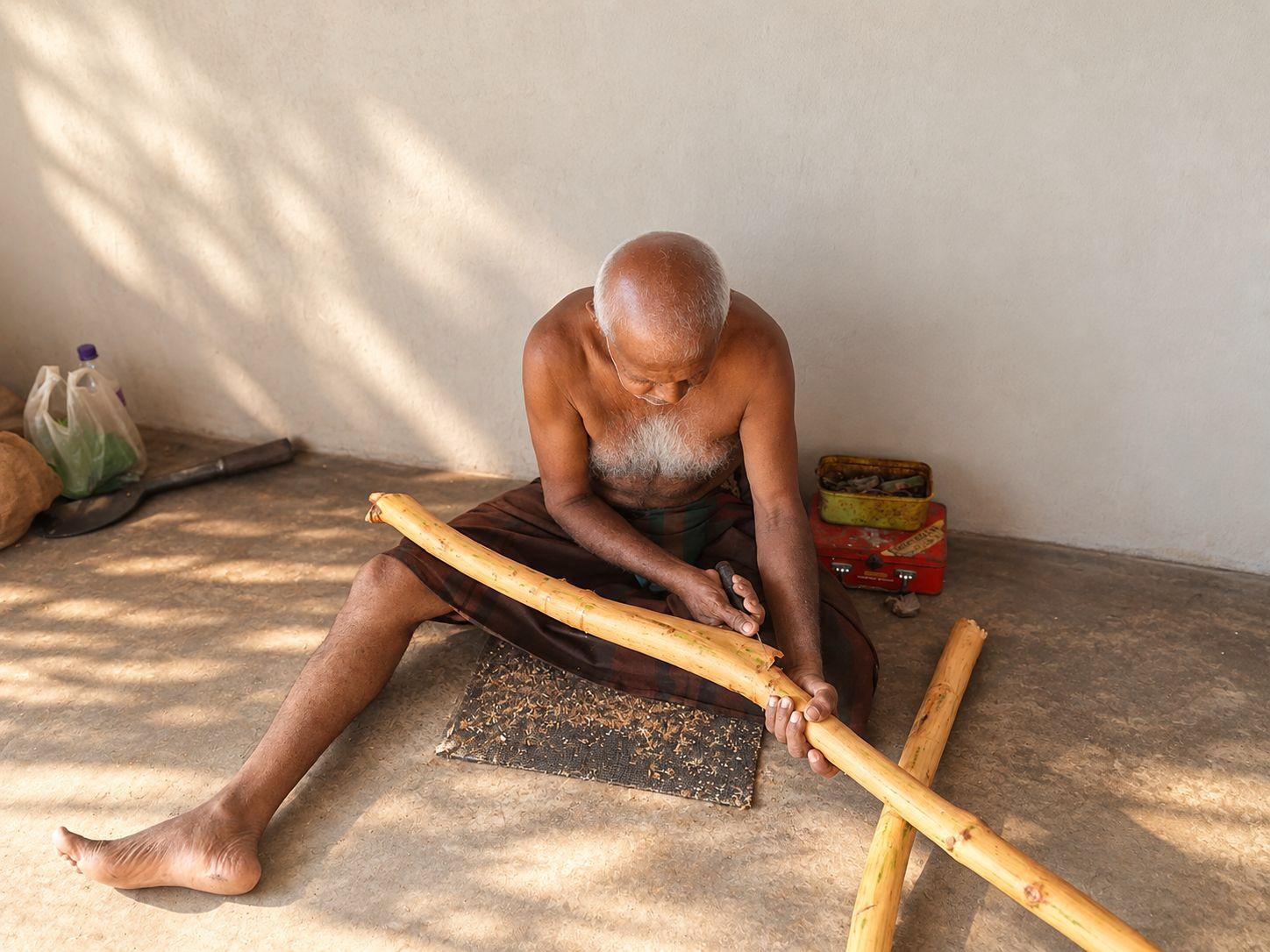
The thin, rough outer layer is scraped away with a small knife, revealing the fragrant inner bark that becomes Ceylon cinnamon.
- 03
Rubbing the bark
The scraped stem is rubbed firmly with a brass rod. This loosens the inner bark from the wood so it can be lifted away in one piece.
- 04
Peeling and rolling quills
A skilled peeler slits the bark and eases it off in long, thin strips, then nests the strips inside one another to build a quill.
- 05
Drying and grading
Quills dry slowly in the shade, then are graded by thickness and quality before moving from the producer to the merchant.
Guests see the process in a genuine local cinnamon-growing environment, understand traditional processing, and connect directly with the producer.
Book the cinnamon tapping experience